
The Wayfinding Signage Guide
Understanding the benefits of better signage
Think about the last time you walked into an unfamiliar building.
Without really thinking about it, you probably started looking for signs.
Where’s reception? Which level do I need? Where are the lifts? Where do I park? Which way is the exit?
When wayfinding signage works well, navigating a space feels effortless.
When it doesn’t, you notice.
Confusing directions, inconsistent signs, missing information and poorly positioned directories can quickly turn a simple visit into a frustrating experience.
That’s why effective wayfinding signage (also known as directional signs), isn’t simply about putting signs on walls.
It’s about creating a considered wayfinding system that guides people intuitively from the moment they arrive to the moment they leave.
In this guide, we explore what makes a successful wayfinding signage system and the benefits better signage can bring to your business, building and the people using it.
What is a Wayfinding Signage System?
Wayfinding signage is a coordinated system of signs, maps, directories, symbols and visual cues that helps people understand where they are and navigate to where they need to go.
A complete system may include:
- Building identification signage
- Entry and reception signage
- Directional signage
- Building directories
- Floor and level directories
- Room identification signs
- Car park signage
- Amenities signage
- Maps and orientation signage
- Accessible signage
- Statutory and safety signage
- Exterior directional signage
The important part is that these signs don’t operate independently.
They work together.
From entering a car park to finding reception, locating the correct floor and eventually finding a specific room, good wayfinding considers the entire journey.
What are the benefits of good Wayfinding Signage?
1. Creates a Better Visitor Experience
One of the biggest benefits of a well-planned wayfinding system is simple:
It makes things easier.
When visitors can quickly understand where they are and where they need to go, they feel more confident navigating your space.
There’s less uncertainty, less stopping to check directions and less frustration.
For businesses, that means the customer experience starts before someone even reaches reception.
Good wayfinding creates an environment that feels organised, considered and welcoming.
2. Makes Large or Complex Spaces Easier to Navigate
The larger the environment, the more important the wayfinding strategy becomes.
Consider places such as:
- Universities and education facilities
- Commercial office buildings
- Healthcare environments
- Shopping centres
- Industrial facilities
- Government buildings
- Hotels
- Sporting facilities
- Multi-tenanted developments
- Large corporate workplaces
There may be multiple entrances, buildings, levels, departments and destinations.
Without a clear signage hierarchy, visitors can easily become overwhelmed.
An effective wayfinding system breaks that journey into simple steps.
ARRIVE → ORIENTATE → NAVIGATE → IDENTIFY → ARRIVE
At every stage, the signage provides the information needed to make the next decision.
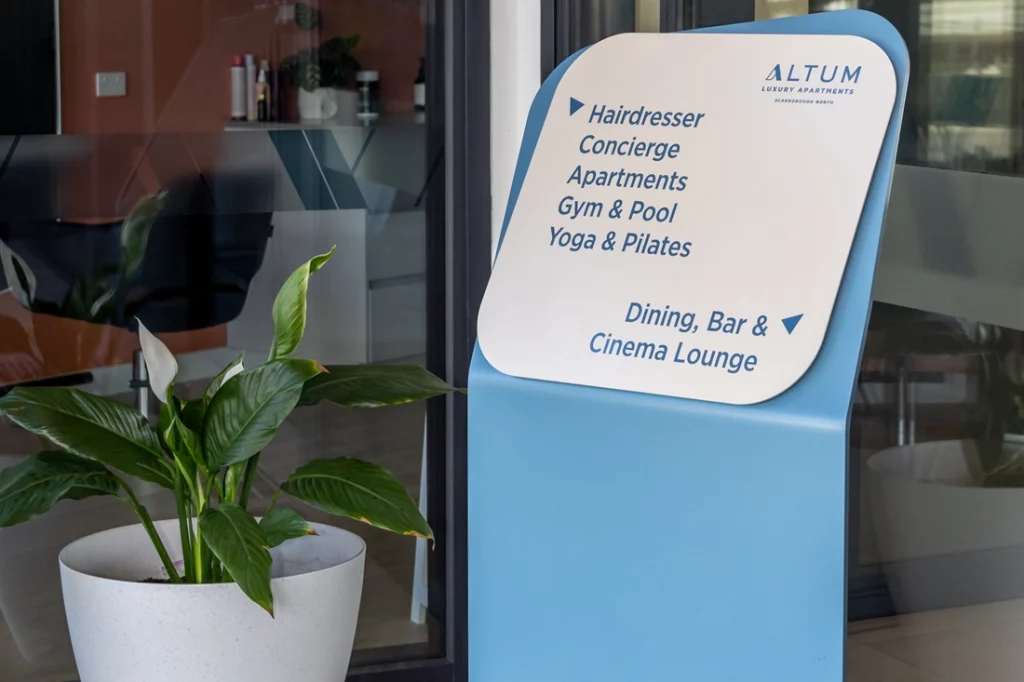
3. Reduces Confusion and Unnecessary Questions
How often does your reception team hear:
“Where are the toilets?”
“Which way are the lifts?”
“Where is Meeting Room 4?”
“How do I get back to the car park?”
If the same questions are being asked repeatedly, there’s often an opportunity to improve the signage.
Effective directional signage allows visitors to navigate more independently, reducing unnecessary interruptions for reception teams and other employees.
For high-traffic environments, those small improvements can make a significant difference to how efficiently the space operates.
4. Creates a More Accessible Environment
A successful wayfinding system should consider the needs of different people using the environment.
That means thinking beyond what information appears on the sign.
Good wayfinding design considers:
Typography
Is the information clear and easy to read?
Contrast
Is there sufficient contrast between text, symbols and backgrounds?
Sign Positioning
Is information located where people naturally expect to find it?
Viewing Distance
Is the information appropriately sized for the distance it will be viewed from?
Symbols & Pictograms
Can recognised symbols communicate information quickly?
Consistency
Are the same terminology, colours, arrows and visual cues used throughout the building?
Accessibility and statutory requirements may also need to be incorporated depending on the environment and signage application.
The result should be a signage system that makes navigating the space easier for as many people as possible.
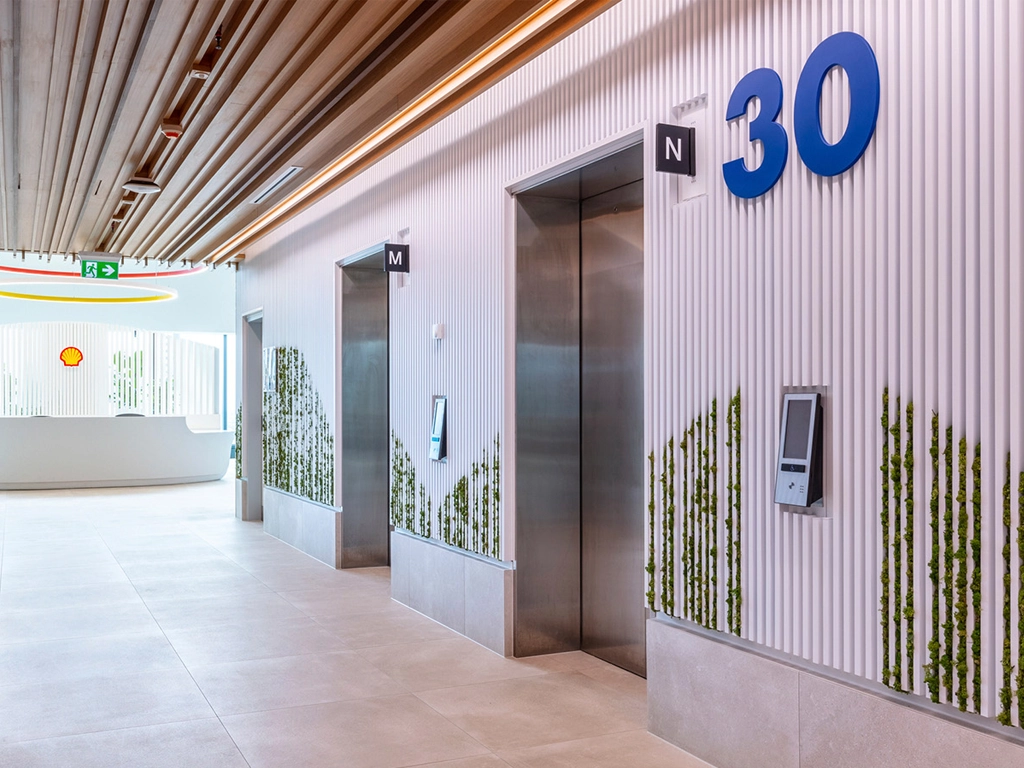
5. Strengthens Your Brand Throughout the Building
Wayfinding needs to be functional.
But functional doesn’t have to mean boring.
A well-designed signage system can become an extension of your brand and the architecture of your building.
Brand elements can be incorporated through:
- Colour
- Typography
- Materials
- Shapes
- Icons
- Graphics
- Finishes
- Architectural features
The objective isn’t to turn every directional sign into an advertisement.
It’s about creating a consistent visual language throughout the space.
When building signage, reception signage, directories and directional signage all feel connected, the entire environment feels more considered.
What Makes a Good Wayfinding System?
Adding more signs doesn’t necessarily make navigation easier.
Sometimes it makes it worse.
Successful wayfinding is about providing the right information, in the right place, at the right time.
A strong system should be:
CLEAR
Information should be easy to understand quickly.
CONSISTENT
Typography, colours, terminology, symbols and arrows should follow the same system.
VISIBLE
Signs need to be positioned where people naturally look for information.
LOGICAL
Information should follow the way people actually move through the building.
ACCESSIBLE
Different users and accessibility requirements should be considered.
ON-BRAND
The signage should complement the organisation’s visual identity and environment.

Does Your Existing Wayfinding Need an Upgrade?
Wayfinding systems don’t necessarily stop working overnight.
More often, they slowly become outdated.
A business expands.
A tenant moves.
A department changes floors.
A building gets renovated.
Someone adds a temporary printed sign.
Then another.
And another.
Eventually the original signage system no longer reflects how the building actually operates.
Consider Wayfinding Early
If you’re planning a new building, workplace fit-out or renovation, don’t leave signage until the very end.
Considering wayfinding early allows signage to work with the architecture rather than being added as an afterthought.
It provides an opportunity to consider:
- Visitor movement
- Sign locations
- Mounting requirements
- Sightlines
- Lighting
- Materials
- Branding
- Accessibility
- Signage hierarchy
- Future updates
The earlier signage is considered, the more integrated the final result can feel.

Ready to Improve Your Wayfinding?
Great wayfinding should feel effortless.
It helps people arrive, orientate themselves, navigate confidently and reach their destination – while reinforcing the professionalism and identity of your organisation along the way.
Whether you’re planning signage for a new development, completing a commercial fit-out or wondering whether your existing wayfinding is still doing its job, The Factory can help.
LET’S MAKE YOUR SPACE EASIER TO NAVIGATE.
Talk to our team about your next wayfinding signage project.