
Multi-Location Signage:From Design to Installation
Inside The Factory: How We Deliver Consistent Signage Across Multiple Locations
When your business operates across multiple locations, signage becomes much more than producing a sign and installing it on a wall.
Every location may have different building dimensions, site conditions, council requirements and installation considerations – yet the finished signage still needs to look and feel unmistakably part of the same brand.
That’s where a coordinated multi-location signage approach becomes important.
At The Factory, we manage commercial signage projects from the initial artwork and site planning through to manufacturing, quality assurance and installation. By keeping each stage connected, we can help businesses maintain consistent signage standards across multiple sites while adapting the solution to suit each individual location.
Here’s what happens behind the scenes.
Multi-Location Signage Starts With a Consistent Plan
For businesses with multiple premises, consistency is one of the most important parts of a signage rollout.
A customer visiting one location should experience the same visual identity when they visit another. Colours, logos, typography, materials and general presentation all contribute to that recognition.
However, consistency doesn’t necessarily mean producing an identical sign for every building.
One location may require large building signage, while another might need fascia signage, window graphics, directional signs or a freestanding pylon. Building architecture, viewing distances and available fixing points can also vary significantly between sites.
Successful multi-location signage projects therefore require a system that protects the brand while allowing the signage to adapt to each environment.
At The Factory, that process begins well before manufacturing.

Artwork & Brand Application
The artwork stage establishes how the brand will translate into physical signage.
Our team works with supplied brand assets and specifications to determine how logos, colours, typography and other visual elements should be applied across different signage formats.
This is particularly important when managing signage across multiple locations.
A logo that works perfectly on a large building fascia may need to be approached differently when used on a smaller directional sign, window graphic or reception feature.
By establishing clear artwork and signage specifications early, we can create a consistent foundation for the wider rollout.

Site Surveys, Measurements & Elevations
Every building is different.
Before signage moves into production, accurate site information helps determine how the proposed signage will work within the physical environment.
Depending on the project, this may include reviewing building dimensions, available signage areas, fixing requirements, access considerations and surrounding architectural features.
From there, signage can be presented through elevations and visual layouts showing its proposed scale and position on the building.
For a multi-location signage rollout, elevations are particularly valuable because they allow individual sites to be assessed while maintaining the broader signage standards established for the brand.
Rather than simply asking, “Does this sign fit?”, the process considers:
Does it look right? Is it visible? Does it suit the architecture? And does it remain consistent with the other locations?
These decisions can be made before the signage reaches production.

Selecting the Right Signage Materials
Material selection can have a significant impact on how commercial signage looks, performs and ages.
The right material will depend on factors including whether the signage is internal or external, its exposure to weather, required lifespan, installation method, desired finish and overall design.
Depending on the project, this could include aluminium, acrylic, vinyl graphics, fabricated lettering, illuminated signage components and other commercial signage materials.
For businesses operating across several sites, material selection also contributes to brand consistency.
Establishing specifications for finishes, colours and construction methods helps create a repeatable signage standard that can be carried across future locations.
It also means new sites don’t necessarily have to start the signage process from scratch.

Signage Manufacturing
Once artwork, specifications and materials have been approved, the project moves into manufacturing.
This is where digital concepts become physical signage.
The Factory’s in-house capabilities include fabrication, printing, painting and signage production, allowing different elements of a project to be coordinated through one team.
For larger commercial signage projects, this becomes particularly valuable.
Instead of treating every sign as an isolated item, production can be considered as part of the wider rollout — helping maintain consistency in construction, colour, finish and presentation across the project.
Whether the rollout involves one site or multiple locations, the objective remains the same: manufacture signage that accurately reflects the approved design and is built appropriately for its intended environment.

Quality Assurance Before Installation
Consistency isn’t achieved simply by using the same logo.
Small differences in colour, sizing, finishes, positioning and construction can become noticeable when signage is rolled out across several locations.
That’s why quality assurance forms an important part of the production process.
Before signage leaves The Factory, completed elements can be checked against the approved specifications and project requirements.
For multi-site projects, this helps ensure the signage arriving at each location reflects the same established standard.
Quality assurance also provides another opportunity to identify issues before installation, rather than discovering them once signage has already reached site.

Coordinating Signage Installation
Installation is the final stage where planning, manufacturing and site preparation come together.
Commercial signage installation can involve considerably more than fixing a sign to a building. Access requirements, building surfaces, electrical connections for illuminated signage, installation heights and operating environments can all influence how a project needs to be delivered.
For businesses with multiple locations, installation scheduling can become another project in itself.
Sites may need to remain operational during installation, work may need to happen outside standard trading hours, or multiple locations may need to be completed within a particular rollout period.
Having one team coordinate the wider signage project helps connect manufacturing schedules with what is actually happening on site.

One Signage Standard. Multiple Locations.
One of the biggest advantages of establishing a coordinated multi-location signage system is that the work completed today can make future projects easier.
Once brand specifications, materials, construction methods and signage standards have been established, they can provide a framework for future locations.
When a new branch, office, retail location, school campus or commercial site opens, there is already a clear starting point.
The physical building may change.
The signage requirements may change.
But the brand standard remains consistent.
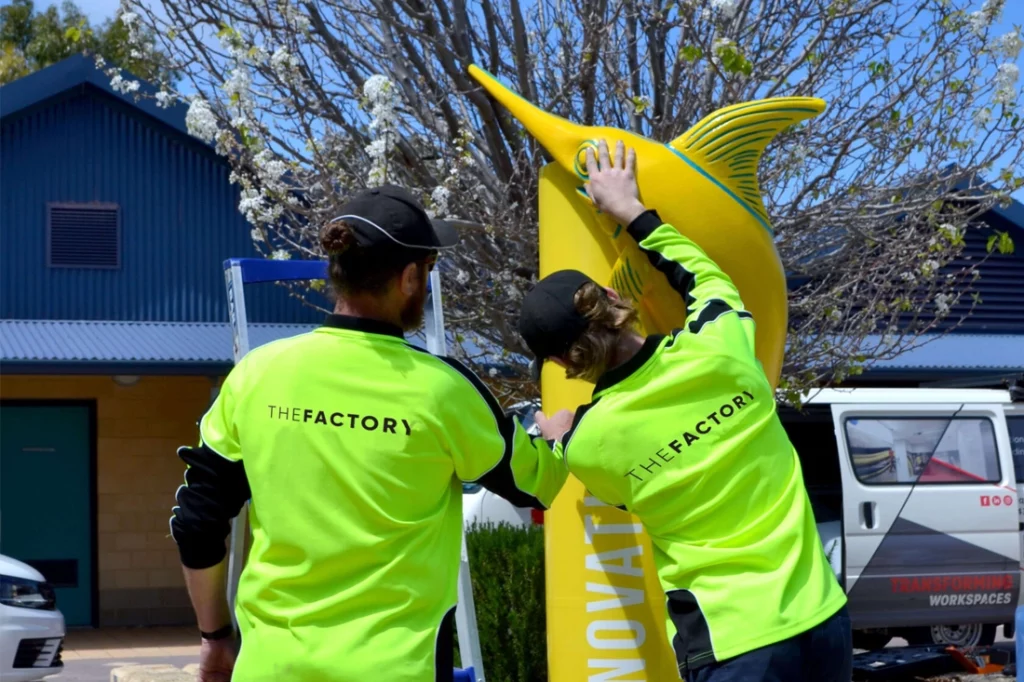
More Than Sign Manufacturing
Large signage projects require several disciplines to work together.
There is the creative side: artwork, layouts and brand application.
There is the technical side: measurements, elevations, materials and fabrication.
Then there is the operational side: production schedules, quality assurance, site coordination and installation.
The value of bringing these stages together is that decisions made at the beginning of the project aren’t lost by the time signage reaches the installation stage.
For organisations managing multiple sites, that creates a more coordinated approach to commercial signage and provides greater control over how the brand appears in the physical environment.
Planning a Multi-Location Signage Project?
Whether you’re refreshing an established network of locations, rolling out a new brand identity or preparing signage for future sites, developing clear signage standards early can make the entire process more manageable.
With more than 30 years of experience delivering commercial signage projects, The Factory can manage the process from artwork and elevations through to material selection, manufacturing, quality assurance and installation.
One team. One signage standard. However many locations your business needs.